Tesla’s flying Roadster: launch lessons for your product page
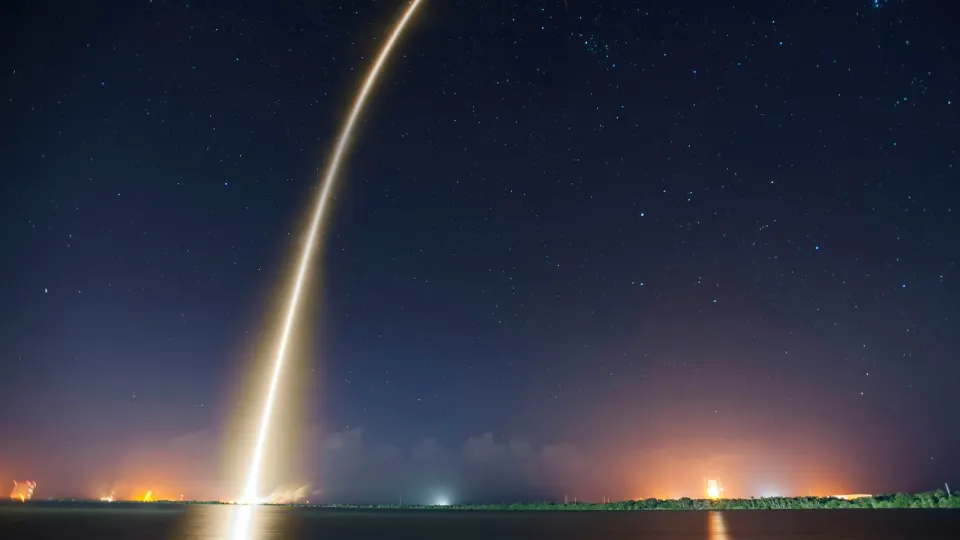
On the evening of October 15, 2026, Tesla finally unveiled the new Roadster. The car drove up a curved ramp, hung upside down, pushed off on cold-gas thrusters, flipped in mid-air and landed. Reservations went live on Tesla’s website the same day. As a studio that builds launch websites, we care most about that second part: how a product nobody can buy yet becomes a pre-order.
Below: what was shown, what is confirmed versus still promised, and which tactics you can borrow for your own launch page without a SpaceX budget.
What Tesla showed
The event was livestreamed from a SpaceX test site in McGregor, Texas. Fox Business describes a fan-based suction system that kept the car stuck to the inverted ramp; on a second run it jumped a row of Tesla vehicles. According to TechCrunch, the lineup included a Cybercab, Cybertruck, Semi, Model Y and Model 3.
The claims, as reported by TechCrunch and Euronews:
- three versions: Performance (two seats, road-focused), Thrust (two seats, rear cold-gas thrusters) and Rocket (single seat, ten thrusters around the body, invitation only);
- a top speed above 230 mph and roughly 300 miles of range across the lineup;
- 0–60 mph in under a second for the Thrust version;
- production starting in 2028, with no vehicle price announced.
A caveat: “flying” here means controlled jumps and hovering, not flight in the usual sense. Euronews quotes Musk calling it “not necessarily a safety optimised car”, and before the event Electrek reported that the demo car was reportedly remote-operated and not street-legal. For now every number is a company claim, not an independent test result.
Why it worked as marketing
Our take: Tesla sold a spectacle, not a spec sheet. Anyone can read an acceleration figure, but what people share is the clip of the flip. Three lessons carry over to a small business.
Showing beats telling. One honest video of the product doing its main job persuades better than a list of features. For a bakery that might be a cake coming together; for a software service, a screen recording of a customer getting a result in a minute.
The offer appeared at peak attention. TechCrunch reports reservations were available on launch day. A viewer who has just watched the stream should not have to wait a week for “pre-orders opening soon”.
A ladder instead of a single price. Three versions with different deposits, plus an invitation-only tier, give everyone an entry point. It is a pricing table in disguise, framed as the car’s personality rather than a price list.
Your launch page: what to borrow
How these tactics translate to an ordinary business. The examples are illustrative, not client cases.
| What Tesla did | How to adapt it |
|---|---|
| A livestream built around one stunt | A short video where the product solves one customer problem |
| Reservations opened the same night | A pre-order or waitlist form on the page from day one |
| Three versions with different deposits | Two or three packages with an obvious difference |
| An invitation-only version | A limited batch or early access, if it is genuinely limited |
| No price yet, but a deposit | State clearly what is known (deposit, refund terms) and what is not |
A small launch, say a new course or a seasonal menu, needs just one page: a headline with a promise, the video, packages, a form and an FAQ. If you plan to send ad and social traffic to it, a custom landing page kept separate from your main site is easier to test and rework for each campaign.
Launch video on your site: the technical side
On a launch page the video is your strongest argument, so make sure search engines understand it too. Google documents VideoObject markup for this, with three required fields: name, thumbnailUrl and uploadDate.
If you stream the launch live, Google’s documentation describes a publication property of type BroadcastEvent with isLiveBroadcast, startDate and endDate, which makes the video eligible for a LIVE badge in search. Afterwards you can mark key moments with Clip so results can jump straight to, for example, the demo. Google requires such a video to be at least 30 seconds long.
The other side is speed. An embedded YouTube player pulls in a lot of third-party code. The web.dev team recommends a facade instead: a static preview with a play button that loads the real player only on click, plus loading="lazy" for videos below the fold. Our advice: build the preview from a frame you choose rather than the auto-generated thumbnail, because that image is what earns the click.
Careful with dates: nine years of promises
The Roadster’s history is a good example of what not to do on a launch page. According to Electrek and TechCrunch, the schedule slipped again and again:
- 12017first reveal, $50,000 reservations, production promised for 2020
- 22020–2024production start pushed back a year at a time, several times
- 3Late 2025the demo moved to April 1, 2026, then moved several more times
- 4October 1, 2026event called off for weather, since the show could only run outdoors
- 5October 15, 2026unveiling, new reservations, production from 2028
Sources: Electrek (October 13, 2026), TechCrunch (October 15, 2026)
Tesla can absorb delays like these thanks to other products and a loyal audience. For a small company a delayed launch costs more: a customer who paid a deposit expects exactly the date they saw on the page.
In practice we recommend:
- giving a window (“November”, “by the end of the quarter”) rather than a precise date until you are sure;
- stating plainly whether the deposit is refundable and how;
- showing a status: “taking orders”, “preparing the first batch”, “shipping”;
- emailing updates to people on the list before they start asking.
Launch page checklist
- The headline says what it is and who it is for, no riddles
- A video or animation of the product doing its main job
- One to three packages with a clear difference
- A pre-order or waitlist form available from day one
- Deposit and refund terms in plain language
- Timing given as a window, not an unguaranteed exact date
-
VideoObjectmarkup and a lightweight preview instead of a heavy player - Analytics that show how many people watched the video and signed up
What to do next
Few small businesses can stage a Roadster-style show, and they don’t need to. The logic, though, is easy to copy: show the product working, open sign-ups at peak interest, offer a few clear options and be honest about timing. If you are preparing a launch and want the page ready before the video is, tell us about your product and we will suggest a structure for your scenario.
Tags
- Tesla Roadster
- product launch
- pre-order page
- landing page
- video on website
- launch marketing